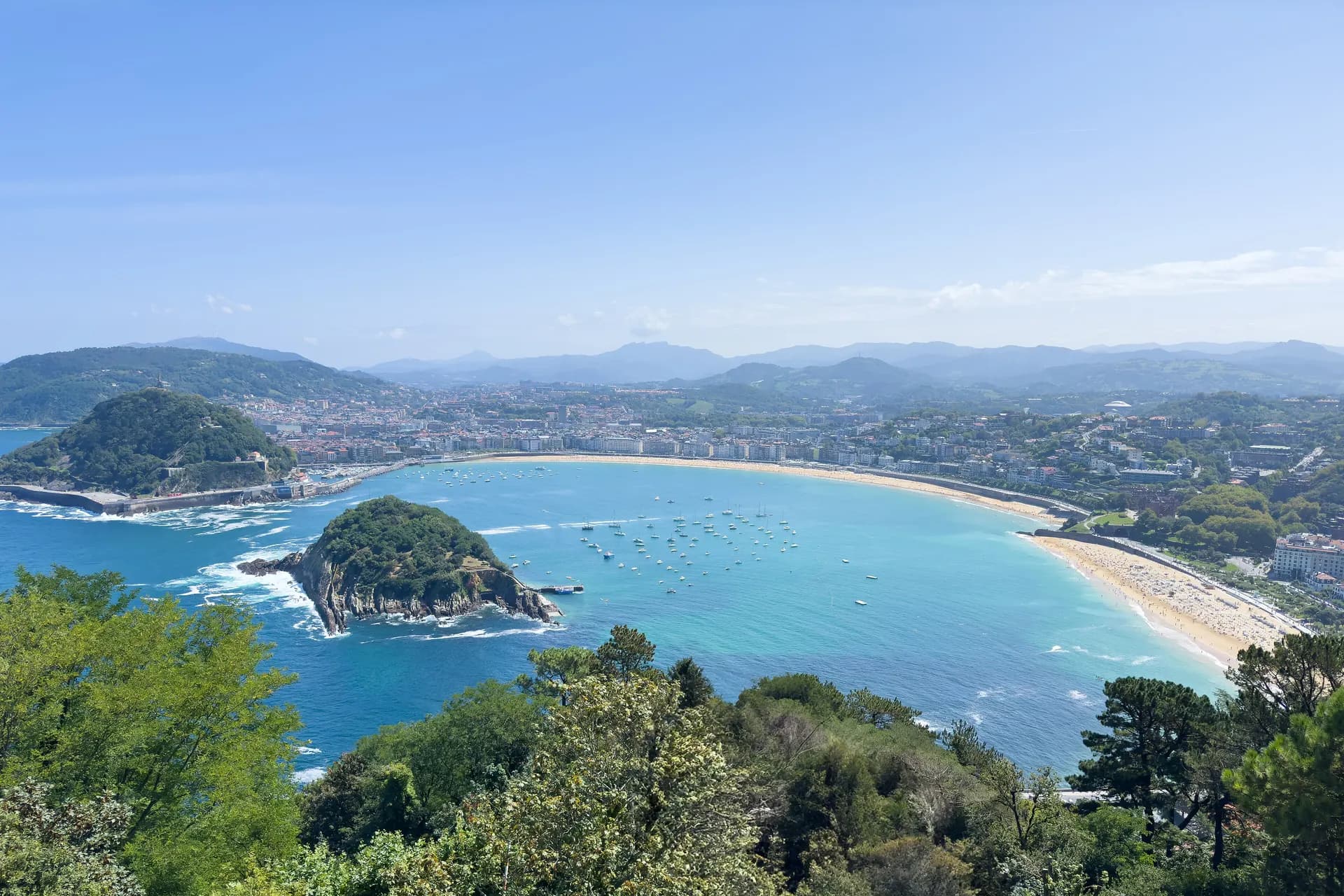
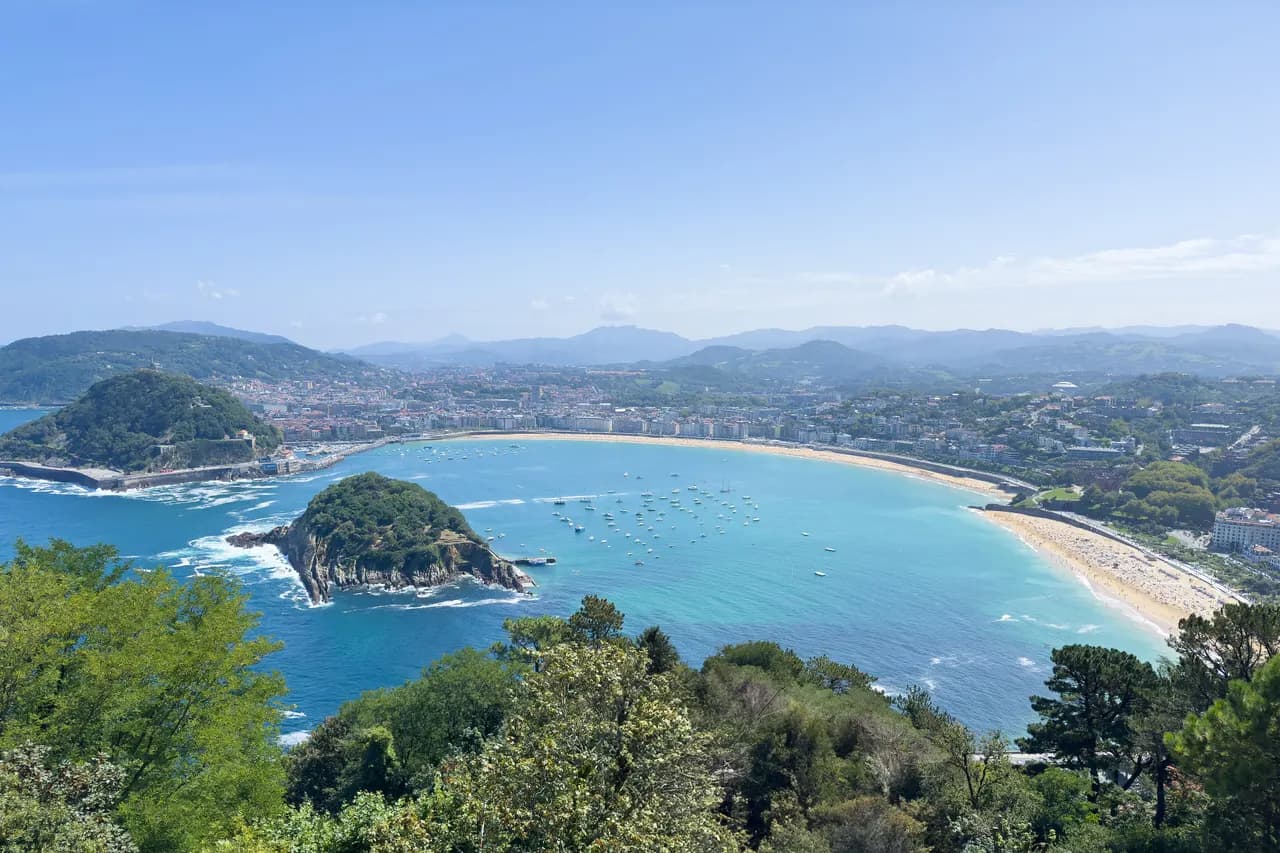
San Sebastián is a small city that eats the world, literally: few places pack this much good cooking per square metre. The ritual is the pintxo crawl in the Parte Vieja, and it has rules: one pintxo and one drink per bar, order at the counter and move on to the next; you do not sit down and ask for a menu. Every bar has its speciality, so ask what it is. If you want a Michelin-starred table, book weeks or months ahead. The rest is walking: the full sweep of La Concha bay along the promenade, the funicular up Monte Igueldo for the classic view, and the free climb up Monte Urgull for the best sunset. Zurriola is the beach for waves and a younger crowd. It is not a cheap city, fair warning. May to September brings the kindest weather, but pack a rain jacket: the sirimiri drizzle ignores the seasons.
Best time to go
May to September
Recommended days
2 days
What to see in San Sebastián
The places genuinely worth your time, with the practical trick for each one.
The Parte Vieja and pintxos
The ritual has rules: one pintxo and one drink per bar, ordered at the counter, then on to the next. Don't sit down waiting for a menu. Each bar has its speciality —the gilda, the txuleta, the cod— so ask what it is and order that, not whatever looks prettiest.
La Concha bay
The full promenade, with its white railing, is one of the loveliest walks in Spain and takes a good hour from the town hall to the Comb of the Wind. Do it at low tide, when the beach widens, or at sunset with Santa Clara island silhouetted offshore.
Monte Igueldo
The 1912 funicular climbs to the classic view of the bay, the one in every photograph. At the top there's an old, slightly shabby fairground that children adore. Go up before sunset and walk down if you fancy stretching your legs.
Monte Urgull
The climb is free, takes twenty minutes and gives the best sunset in the city from the foot of the Christ statue. There's also a small museum on the city's history and old gun batteries along the way. Plenty of people skip it for Igueldo: take advantage.
Zurriola beach and Gros
The beach of waves and surf, separated from La Concha by the river. The Gros neighbourhood behind it has younger, cheaper pintxo bars with far less of a crush than the Parte Vieja. If you're here two nights, give it one of them entirely.
The Comb of the Wind
Chillida's three sculptures anchored in the rock at the end of La Concha, with blowholes that roar when the sea comes in. At high tide with wind it's a spectacle; at low tide it's merely handsome. It's free and always open.
La Bretxa market
The old town's market, with produce from the local farms and the Cantabrian sea. The lower floor is the good one: fishmongers, Idiazábal cheese and the vegetables you'll later meet on top of a pintxo. Go in the morning and buy something for the road.
Pasaia and Hondarribia
If you have half a day spare, Pasai Donibane is a single-street village over the water twenty minutes away by bus, and Hondarribia has a walled old town and a Calle San Pedro full of cider houses. Both are calm plans, far less crowded than the city.
2 days in San Sebastián: a sample itinerary
A realistic day-by-day plan, so you don't spend the trip rushing between sights.
Day 1
La Concha and Igueldo
The full La Concha promenade in the morning, from the town hall to the Miramar palace. Funicular up Igueldo before sunset for the classic view. At night, a pintxo crawl through the Parte Vieja, bar by bar.
Day 2
Urgull, Gros and the Comb of the Wind
La Bretxa market first thing and the climb up Monte Urgull. An afternoon on the Zurriola and calmer pintxos around Gros. Finish at the Comb of the Wind at high tide, watching the blowholes roar.
Two days cover both beaches, both hills and two nights of pintxos, which is the point. With three you can add Pasaia, Hondarribia or a cider house in season. It's a small city: more than four days only make sense if you've come to eat seriously.
How does the pintxo thing work?
You walk in, order a drink and a pintxo at the counter, eat standing up and move on to the next bar. A pintxo costs 3 to 5 euros, and the best ones aren't on the counter but on the blackboard: the hot ones, cooked to order. Four or five bars and you've had dinner.
What is the best time to visit San Sebastián?
May to September is when the weather cooperates most and the beach is usable. September adds the Film Festival, with a lively city but hotel prices through the roof. It rains in any month: the sirimiri drizzle ignores the seasons, so always pack a rain jacket.
Is San Sebastián expensive?
It's one of the priciest cities in Spain, especially for summer accommodation. There's compensation: a set lunch at a grill costs the same as in any capital, pintxos in Gros are cheaper than in the Parte Vieja, and both hills and both beaches cost nothing at all.
Where is the best place to stay in San Sebastián?
The Centro and the Área Romántica put La Concha and the old town five minutes away, with the price that implies. Gros is more affordable, has atmosphere and sits right on the Zurriola. Sleeping in the Parte Vieja is convenient by day and noisy by night: weigh up how much you sleep.