Mallorca is far more than the party island the brochures sell. Three well-chosen days are enough for a cove of impossible blue water, a stone village in the Serra de Tramuntana and a sunset from a lighthouse without a single billboard. The best of it sits well away from Magaluf: the mountainous north-west, the village markets, the wineries of the Pla. You can get around without a car if you plan it —the wooden train to Sóller, the bus to Valldemossa, the boat to Sa Calobra— though renting a car for a single day unlocks coves you'd otherwise miss. Eat sobrassada and pa amb oli without guilt, get up early to have the coves to yourself before ten, and leave one afternoon with no plan at all: Mallorca rewards the slow wander. Skip August if you can; May, June and September give you the same sea with half the crowds.
Best time to go
May, June and September
Recommended days
3 days
What to see in Mallorca
The places genuinely worth your time, with the practical trick for each one.
La Seu, Palma's cathedral
Go early, when the light comes through the rose window and the groups haven't arrived. Gaudí's intervention and Barceló's mural make it unlike any other cathedral. Afterwards, drift through the old town towards the l'Olivar market.
The Sóller train
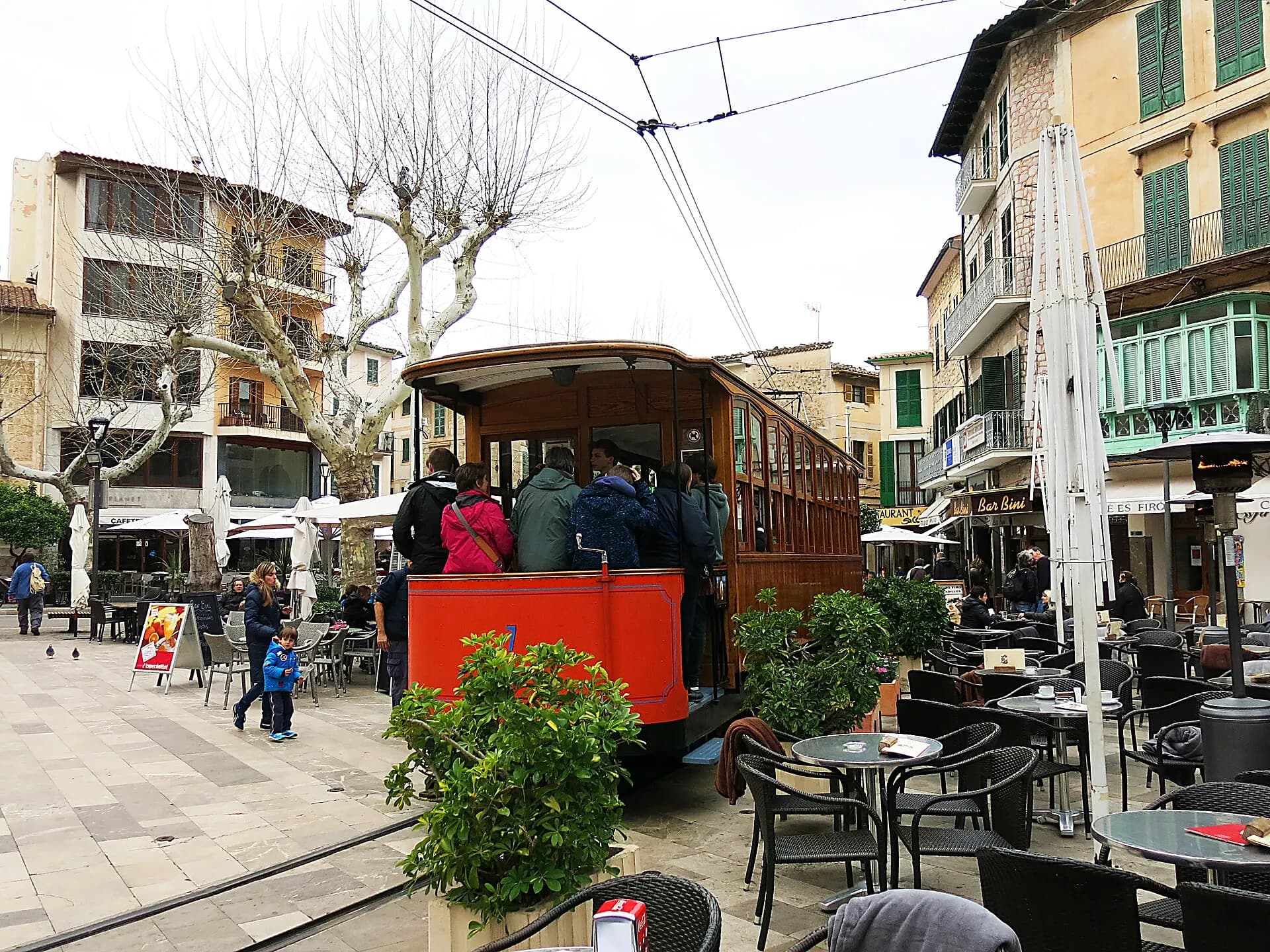
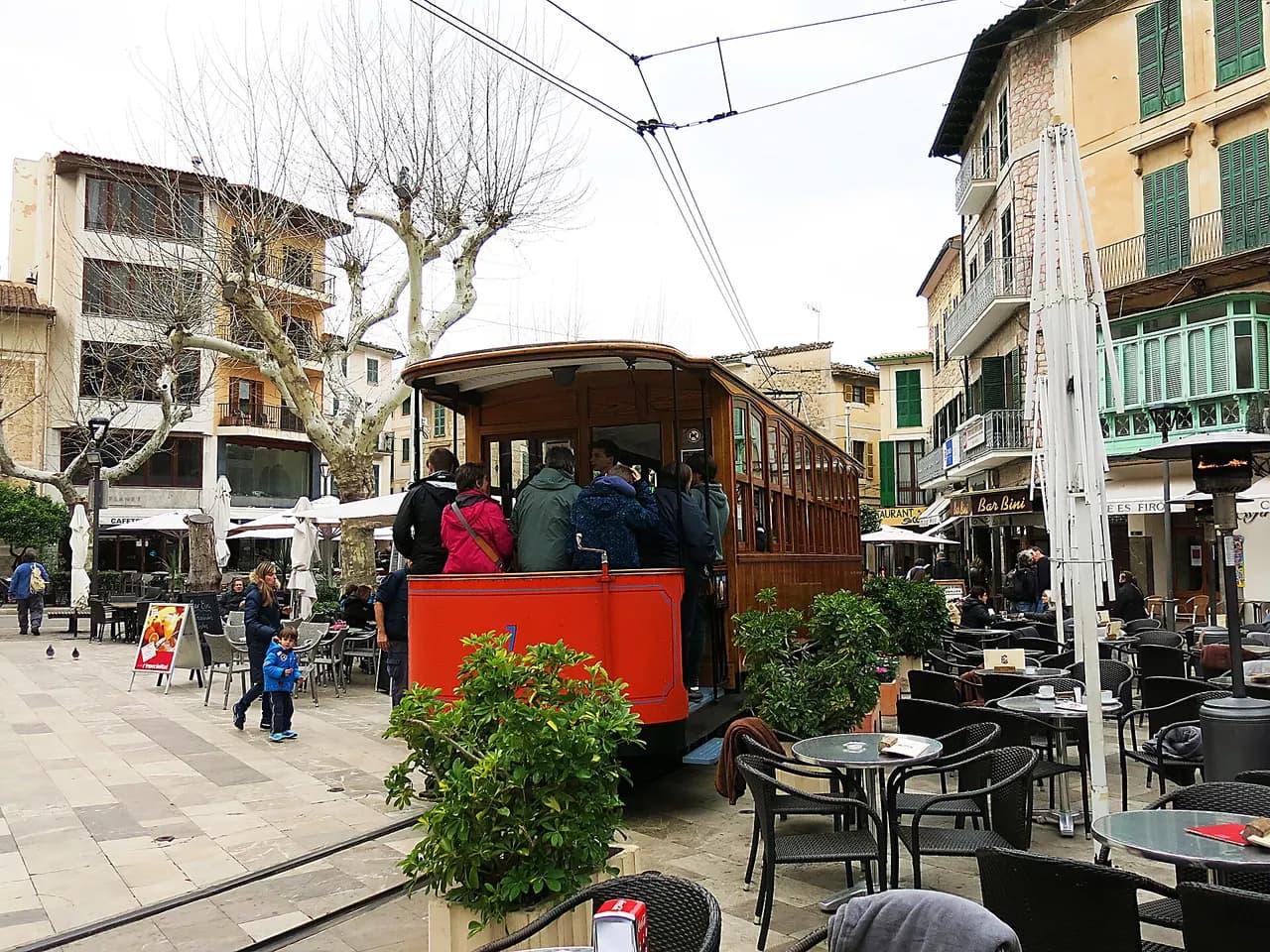
The 1912 wooden train crosses the Serra de Tramuntana from Palma to Sóller in one postcard hour. It isn't cheap, but it's one of those things that justify the trip. From Sóller, the tram rolls down to the port, where you can swim and eat fish facing the sea.
Valldemossa
The stone village where Chopin spent a winter, half an hour from Palma on bus 210. Go first thing or at dusk: at midday the coach tours devour it. Coca de patata with a coffee on a quiet terrace is the ritual.
Deià and its cove
Hanging between mountain and sea, Deià is the genuinely beautiful village, with a pebble cove at the end of a footpath. Robert Graves lived here and you can see why. Parking in summer is a lottery; the bus is your friend.
Sa Calobra and the Torrent de Pareis
The 'tie knot' road is an attraction in itself; the gorge opening onto the sea at the end is another. In summer you can also arrive by boat from Port de Sóller, which is both the easiest and the most beautiful way. Bring water and decent shoes.
Cap de Formentor
The Colomer viewpoint and the road to the lighthouse are the island's most dramatic north. In high season car access is restricted and you go up by bus from Port de Pollença: check the timetables before you go.
Es Trenc
The wild beach of the south: kilometres of white sand and Caribbean-looking water without a single seafront hotel. Arrive before ten or after six; at midday in August there's no room even for your towel.
Caló des Moro
The most photographed cove on the island, and for good reason. It's tiny, it fills up as soon as the sun rises and the descent is steep. If you want to see it like in the photos, get up genuinely early: at eight it's paradise, at eleven a tin of sardines.
Alcúdia
The walled old town takes an hour to walk and the Tuesday and Sunday market is worth the trip. The bay has the island's long, family-friendly beach, with shallow water kids love.
3 days in Mallorca: a sample itinerary
A realistic day-by-day plan, so you don't spend the trip rushing between sights.
Day 1
Palma on foot
La Seu first thing, the old town without hurry, pa amb oli in a neighbourhood bar and the afternoon between the l'Olivar market and the Born promenade. Early dinner: tomorrow starts early.
Day 2
The train to Sóller and Sa Calobra
The wooden train through the Tramuntana, tram down to Port de Sóller, a swim and fish by the sea. In the afternoon, boat or bus to Sa Calobra and the Torrent de Pareis. Back to Palma at sunset.
Day 3
Valldemossa and Deià
Bus 210 to Valldemossa before the coach groups arrive, the charterhouse and coca de patata. Hop to Deià, walk down to the pebble cove and a last quiet afternoon before the airport.
With 3 well-planned days you cover Palma, the Serra de Tramuntana and a cove or two. With 5 you add the north and the southern beaches at an easy pace. A week lets you see the whole island without rushing. Less than 3 days feels short: pick one area and don't try to see everything.
Can you visit Mallorca without a car?
Yes, better than you'd expect. The Sóller train, the tram to the port and the TIB buses connect Palma with Valldemossa, Deià, Sóller and Alcúdia. The southern and eastern coves are another story: for Es Trenc or Caló des Moro, renting a car for a single day solves what the bus can't reach.
What is the best time to visit Mallorca?
May, June and September: same sea, half the crowds and more reasonable prices. July and August are the island at full occupancy. Winter has its fans: hiking in the Tramuntana, almond blossom in February and queue-free villages, though many beach bars and coastal hotels close.
Is Mallorca expensive?
Less than its reputation suggests if you step off the circuit. Coves and viewpoints are free, buses are cheap and in Palma's neighbourhood bars you eat well for 15-20 euros. What blows the budget is seafront accommodation in August and restaurants with a view.
Where is the best place to stay in Mallorca?
First visit: Palma, alive all year round and well connected for day trips. If you're after mountains and villages, Sóller is the best base in the Tramuntana. For a family beach holiday, the bay of Alcúdia. Avoid booking in Magaluf or s'Arenal unless that's exactly what you're going for.