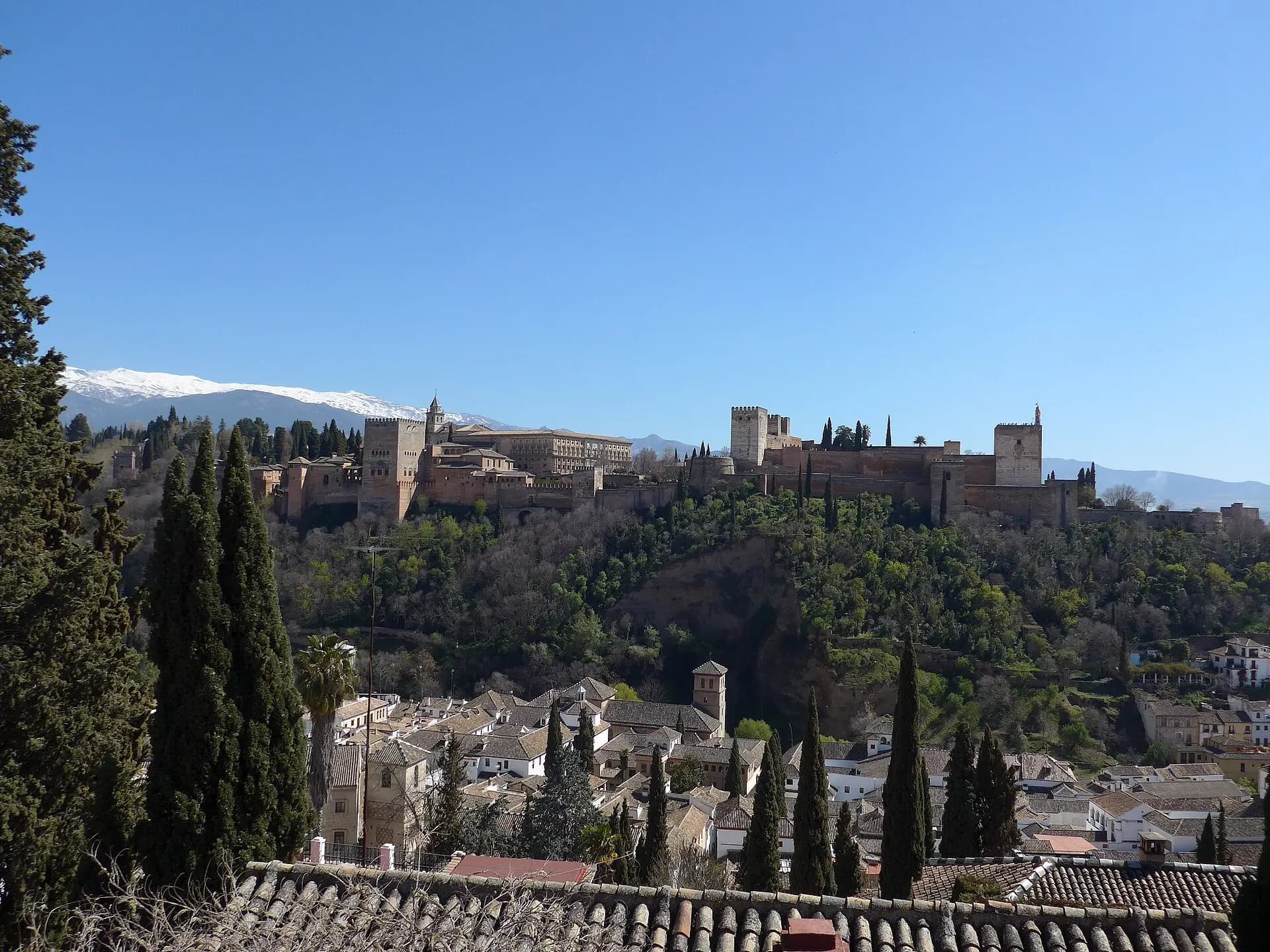
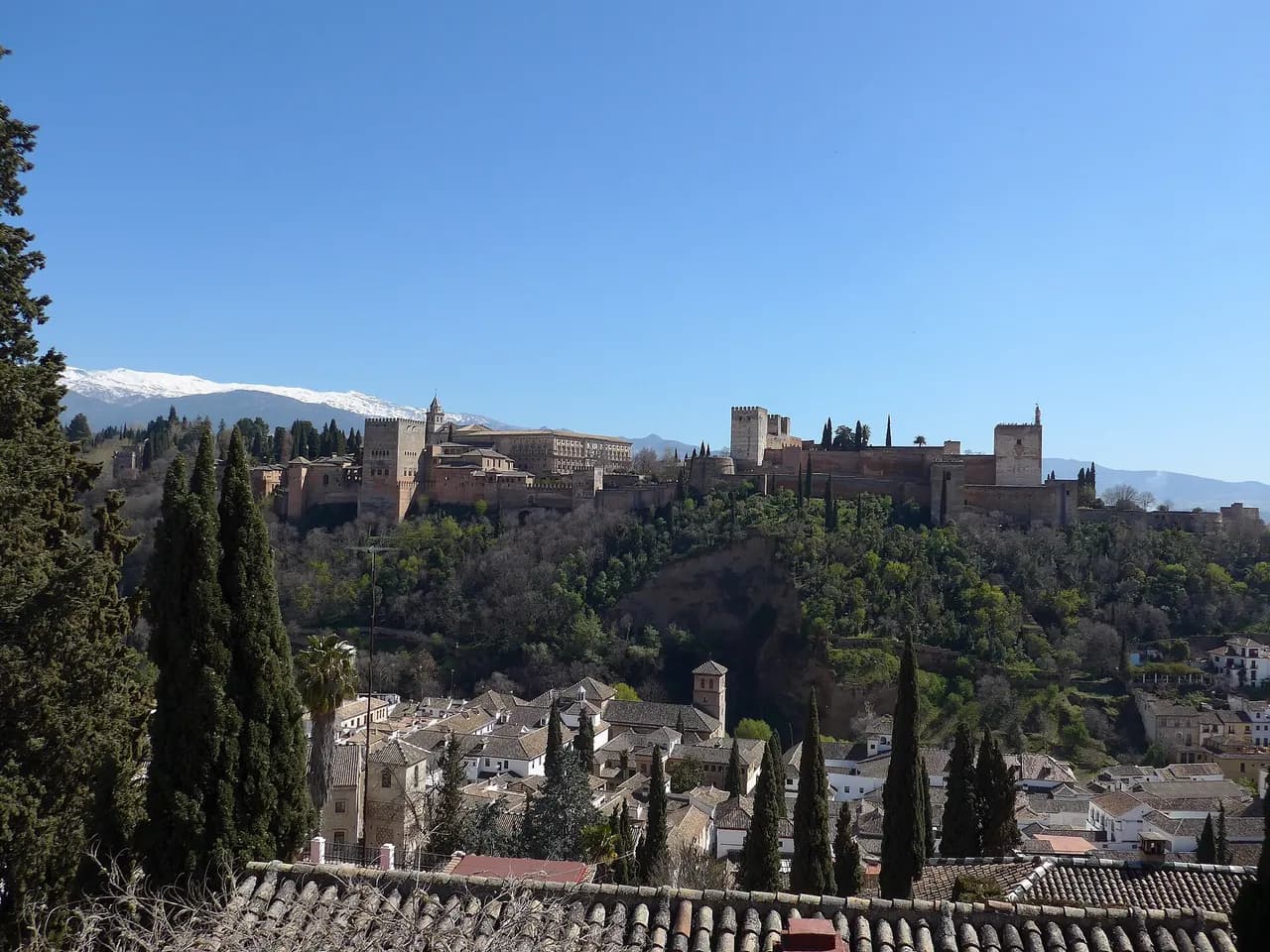
Granada is one of those cities that stays with you. The Alhambra is the reason for the trip —and you must book weeks ahead, no excuses— but the city doesn't end at the palace. There's the Albaicín with its steep streets and hidden cármenes, the Sacromonte of caves and flamenco, and a custom that wins you over: here the tapa still comes free with your beer. Two well-planned days show you the essentials without the rush: the Alhambra for a full morning, the Albaicín at sunset from the mirador de San Nicolás, and a night of tapas hopping from bar to bar. Climb on foot even when it tires you; taxis miss the best of it. Book the night visit to the palaces if you can: it's another city under the moon. Skip July and August: Granada's heat is serious. Spring and autumn are ideal, with the sierra still snow-capped in the distance.
Best time to go
Spring and autumn
Recommended days
2 days
What to see in Granada
The places genuinely worth your time, with the practical trick for each one.
The Alhambra
The reason for the trip, and you must book weeks ahead on the official site. Entry to the Nasrid Palaces has an exact time slot and won't forgive you five minutes, so arrive with a margin. Give it the whole morning: between the Alcazaba, the Nasrid Palaces and the Generalife you're looking at three or four hours.
The Generalife
The sultans' summer gardens, with the Patio de la Acequia and its fountains. It's included in the general ticket and plenty of people rush it in twenty minutes: that's a mistake, it's the calmest part of the complex and the one that rewards taking your time.
The San Nicolás viewpoint
The classic view of the Alhambra with the Sierra Nevada behind, which is why at sunset it's full of people and guitars. It's worth it anyway; if you want the same view with less noise, try the Lona viewpoint or San Miguel Alto a bit higher up.
The Albaicín
The Moorish quarter of steep streets and cármenes behind whitewashed walls. Walk up even if it tires you: taxis miss precisely what you came for. Get lost along the Calderería with its tea houses, then drop down to the Paseo de los Tristes at dusk.
Sacromonte and flamenco
The caves dug into the hillside where the Roma settled, and where the zambra is performed. Pick a small show and book it; the coach-party tablaos are expensive and soulless. The Sacromonte cave museum explains well how people lived up here.
The Cathedral and Royal Chapel
Pure Renaissance in the centre, with the Catholic Monarchs buried next door in the Royal Chapel. You can see both in a good hour and they're steps from the Alcaicería, the old silk market. Check the opening times: they close at midday.
The tapas crawl
Here the tapa still comes free with your drink, and not a token one: there are bars where by the third round you've had dinner. Calle Elvira and Navas are the classics; the Realejo and Pescadería have fewer tourists and better produce. Don't ask for the menu, take whatever comes.
The Alhambra at night
The Nasrid Palaces lit up are another city, with half the crowd and a ticket that's easier to get. It doesn't replace the daytime visit because it doesn't cover the whole complex, but if the day slots are sold out it's the best alternative there is.
The Cartuja Monastery
Twenty minutes from the centre and almost always empty, with a baroque sacristy that throws you after so much Nasrid restraint. A good plan for the second morning once the Alhambra is done and you want something without queues.
2 days in Granada: a sample itinerary
A realistic day-by-day plan, so you don't spend the trip rushing between sights.
Day 1
The Alhambra and the Realejo
A full morning at the Alhambra with your Nasrid time slot booked, no rushing. Lunch in the Realejo, a walk through the old Jewish quarter and its murals, then a first round of tapas along Navas.
Day 2
Albaicín, Sacromonte and sunset
Cathedral and Royal Chapel first thing, then walk up to the Albaicín through the Calderería and a slow lunch. In the afternoon, Sacromonte, sunset at San Nicolás and a zambra in a cave to close the day.
Two well-organised days cover the Alhambra, the Albaicín, Sacromonte and a couple of tapas evenings. With three you can add the Cartuja, the Realejo at a slower pace or a trip up to the Sierra Nevada. A single day only works if you already hold an Alhambra ticket and accept giving up the rest.
How do I get Alhambra tickets?
Only through the official website, and weeks in advance in high season: the daily allocation sells out. If nothing is left, try the night visit, the gardens-and-Generalife ticket, or the Dobla de Oro, which bundles Albaicín monuments. Be wary of resellers charging a premium.
Are tapas really free in Granada?
Yes, it's still the custom: order a beer or a wine and a tapa comes with it, getting better as you keep ordering in the same place. Three or four rounds and you've had dinner for about ten euros. In the most touristy bars the tapa shrinks, so walk a couple of streets further.
What is the best time to visit Granada?
Spring and autumn, with kind temperatures and the sierra still snow-capped behind. July and August are genuinely harsh: over 40 degrees, and the Alhambra with no shade at midday is a punishment. Winter has its charm if you combine the city with skiing in the Sierra Nevada, an hour away by car.
Where is the best place to stay in Granada?
The centre, between the Cathedral and the Realejo, leaves everything walkable without impossible hills. The Albaicín has the charm and the views, but also stairs and streets no car can enter: a bad plan with a large suitcase. Don't stay far from the old town: Granada's appeal is walking it.