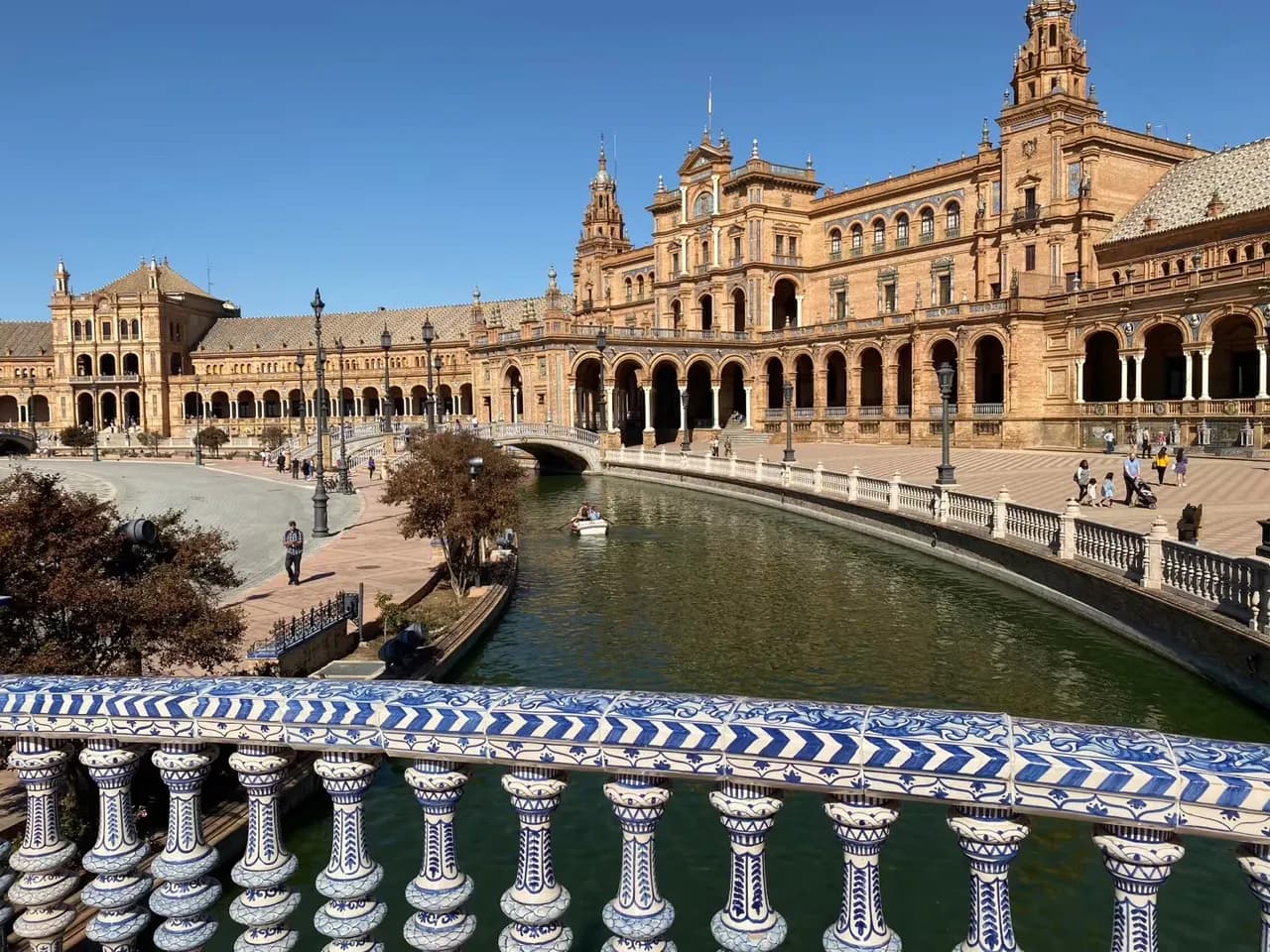
Seville is best enjoyed slowly and at odd hours: early, while the Giralda still throws cool shade, and late at night, when the squares fill with chairs and conversation. The Real Alcázar is the one unmissable visit and you should book it online days ahead, because same-day tickets vanish. The Cathedral and the climb up the Giralda deserve another morning, and Plaza de España costs nothing and looks spectacular at sunset. Cross the bridge to Triana for the real tapas crawl: spinach with chickpeas, fried fish in adobo, a cold beer standing at the bar. Almost all of the centre works on foot, so forget the car. Avoid July and August, when the heat genuinely tops 40 degrees, and know that during Semana Santa and the Feria de Abril prices soar and rooms need booking months out. Spring and autumn show the city at its best, orange blossom included.
Best time to go
Spring and autumn
Recommended days
2 days
What to see in Seville
The places genuinely worth your time, with the practical trick for each one.
The Real Alcázar
A Mudéjar palace still used by the royal family, with gardens that justify the ticket on their own. Book online days ahead and take the earliest slot: by mid-morning there's a queue even with a ticket. If budget allows, the Royal Apartments are a separate visit with a small daily quota.
The Cathedral and the Giralda
The largest Gothic cathedral in the world, with Columbus's tomb and the Giralda alongside. You climb the tower by ramps, not stairs, so it's easier than it looks. Go first thing or at the end of the day: at midday it's a corridor of tour groups.
Plaza de España
It's free, it's enormous and at sunset with the light coming in sideways it's one of the finest sights in Spain. The tiled benches for each province are the perfect excuse to walk the full circle. Get there on foot through the park, not by taxi.
Parque de María Luisa
The shade that saves your day in Seville, with fountains, pavilions and orange trees. It works especially well in mid-afternoon, when the centre is still baking. Renting a bike or simply sitting for a while both count as a plan.
The Santa Cruz quarter
The old Jewish quarter, a tangle of whitewashed alleys and courtyards full of pots. It's beautiful and it's busy: walk it early or at night. The small squares like Doña Elvira or Santa Marta are what you came to see.
Triana
Cross the Isabel II bridge and you change cities. This is where the real tapas crawl lives, along with the traditional ceramics and the market built over the remains of San Jorge castle. Calle Betis at sunset, facing the Torre del Oro, is the best free view in Seville.
Las Setas de Sevilla
The wooden structure at La Encarnación divides opinion, but the walkway on top hands you the whole centre at sunset for very little money. Take the last light slot and come down for dinner around the Alfalfa, right beneath it.
Honest flamenco
The tablaos in the centre are expensive and predictable; the peñas and small venues in Triana or the Alameda deliver the real thing. La Casa de la Memoria and a few peñas put on short, serious shows. Book ahead: they hold thirty people, not three hundred.
Casa de Pilatos
A 16th-century palace with a Mudéjar courtyard and tilework that rivals the Alcázar, and almost never a queue. It's the perfect alternative on the day everything else is sold out, and the guided upper floor is worth the supplement.
2 days in Seville: a sample itinerary
A realistic day-by-day plan, so you don't spend the trip rushing between sights.
Day 1
Alcázar, Cathedral and Santa Cruz
Alcázar on the first slot, taking your time in the gardens. Cathedral and Giralda before lunch, a compulsory siesta and an afternoon in Santa Cruz. Sunset from the Setas walkway and dinner around the Alfalfa.
Day 2
Plaza de España and Triana
Plaza de España and María Luisa in mid-morning, in the shade. Cross to Triana for lunch at the market, ceramics along Calle Alfarería and neighbourhood tapas. Finish on Calle Betis watching the light fall over the river.
Two days cover the Alcázar, the Cathedral, Santa Cruz, Plaza de España and a night of tapas in Triana. With three you can breathe and add Casa de Pilatos, a decent flamenco show or a trip to Itálica. Four make Córdoba or Cádiz possible as a day trip.
How do I avoid the queues at the Alcázar and the Cathedral?
Buy online several days ahead and choose the first morning slot, when there are fewest people inside. The Cathedral sells a combined ticket with the Giralda, also online. If everything is sold out, Casa de Pilatos and the Hospital de los Venerables are easy to get into.
What is the best time to visit Seville?
Spring and autumn, no argument: March, April, October and November bring pleasant warmth and orange blossom in the air. July and August pass 40 degrees and the city empties at midday for a reason. Semana Santa and the Feria de Abril are spectacular, but accommodation soars and needs booking months ahead.
Is Seville expensive?
It's one of the more reasonable Andalusian capitals if you avoid the tourist front line. Tapas run 3 to 4 euros each in an ordinary bar, and in Triana or the Alameda you eat better and cheaper than beside the Cathedral. What's expensive is accommodation during Semana Santa and the Feria.
Where is the best place to stay in Seville?
Santa Cruz and the area around the Cathedral keep everything walkable, at the cost of more noise and higher prices. The Alameda de Hércules has local atmosphere and good bars, ten minutes' walk from the centre. Triana has the most character if you don't mind crossing the bridge every day.