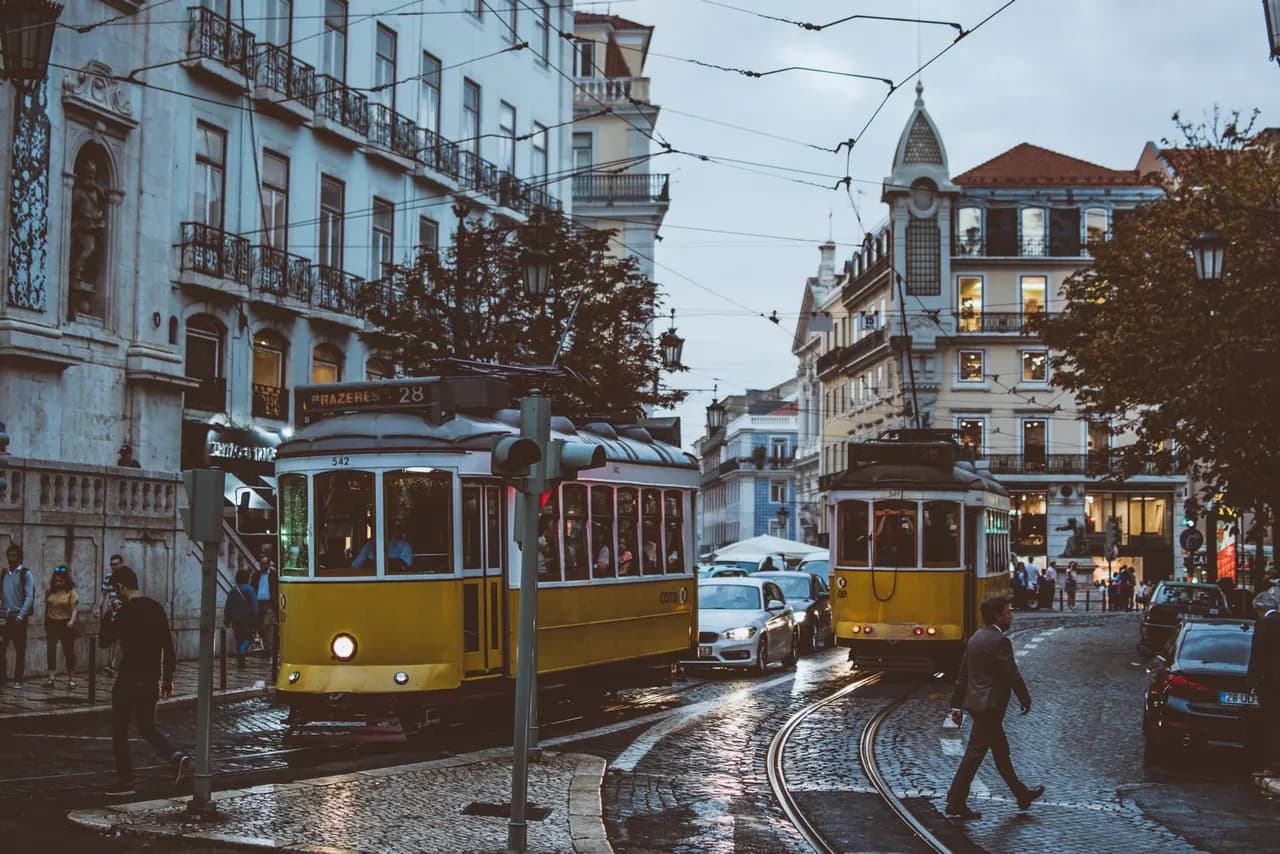
Lisbon is climbed and descended on foot, and that's half the secret of its charm. It's a city of viewpoints, tiles and yellow trams that creak uphill, but also of neighbourhoods most people cross without a glance: Graça at dawn, Alcântara at dusk, Marvila for the wine. Four days are enough for the classics done right —Belém without queues if you go early, an honest fado in Alfama, a day trip to Sintra— without rushing. Eat pastéis de nata straight from the oven, order bacalhau where the locals eat, and save one night to dine late, the way it's done here. Wear comfortable shoes: the cobbles are slippery and the hills deceive. Skip Sintra at the weekend if you can, and keep one morning with no agenda to get lost around Príncipe Real. Spring and early autumn are the best time: golden light and kind temperatures.
Best time to go
Spring and early autumn
Recommended days
4 days
What to see in Lisbon
The places genuinely worth your time, with the practical trick for each one.
Alfama and fado
The oldest quarter, a maze of alleys that survived the 1755 earthquake. By day you wander it without a plan; by night you look for a small fado house, the kind that charges for dinner and demands silence. Avoid any place with a five-language menu at the door.
Belém: Jerónimos and the tower
The Jerónimos monastery is Manueline architecture at its best, and the midday queue is demoralising: arrive at opening or buy online. The Torre de Belém looks fine from outside if you'd rather skip another queue. And yes, the original pastéis de Belém are worth the stop.
The viewpoints
Portas do Sol and Santa Luzia for the classic Alfama postcard, Senhora do Monte for sunset with fewer people, São Pedro de Alcântara for an aperitif. They're free, they're scattered across the city and they explain Lisbon better than any museum.
Tram 28
It crosses half the old town and is an attraction in itself, but the truth is it runs packed and it's pickpocket hunting ground. Board first thing at Martim Moniz, or catch it mid-route where the queue is shorter. If it fails you, tram 12 covers a similar stretch.
Baixa and Chiado
The city rebuilt after the earthquake, a perfect grid running down to Terreiro do Paço. The Santa Justa lift has an absurd queue: you reach the same view by walking up through Chiado and entering via the Carmo Convent.
LX Factory and Alcântara
A converted factory under the 25 de Abril bridge, with a bookshop, small shops and restaurants. It works well for a Sunday afternoon when the market is on. It's one tram ride from the centre and shows you the Lisbon that doesn't make the postcards.
Sintra
Pena Palace, Quinta da Regaleira and the Moorish castle in one long day. Take the train from Rossio, go on a weekday and buy tickets in advance. At the weekend the climb to Pena is a two-hour queue and you leave resenting the trip.
Cascais and the coast
Half an hour by train from Cais do Sodré, on a line that hugs the sea. Cascais is a well-off fishing town with urban beaches; Guincho, further north, is wind and surf. A good plan for the day you want to slow down.
Time Out Market and Graça
The converted Ribeira market gathers good cooks into an expensive but honest food hall. For the opposite, walk up to Graça at dawn: neighbourhood bars, washing hung out to dry and not a single tour bus.
4 days in Lisbon: a sample itinerary
A realistic day-by-day plan, so you don't spend the trip rushing between sights.
Day 1
Baixa, Chiado and Alfama
Start at Terreiro do Paço and walk up through Baixa to Chiado and the Carmo Convent. In the afternoon, Alfama without a map and the Portas do Sol and Senhora do Monte viewpoints. Late dinner and fado in a small house.
Day 2
Belém
Tram 15 first thing: Jerónimos before the queue forms, pastéis de Belém straight from the oven and the walk to the Padrão dos Descobrimentos. In the afternoon, the MAAT or cross to LX Factory under the bridge.
Day 3
Sintra
Early train from Rossio with tickets already booked. Quinta da Regaleira in the morning, Pena Palace after lunch, and back with enough light to have an unhurried dinner in Lisbon.
Day 4
Graça, market and a last afternoon
Graça at dawn with its neighbourhood bars, the Ribeira market for lunch and a free afternoon: Cascais by train if you want the sea, or Príncipe Real and its shops if you'd rather wander with no plan.
Three days cover the old town, Belém and a night of fado without rushing. The fourth is what lets you fit Sintra in without sacrificing the city. With five you can add Cascais or Setúbal and still have time to revisit a neighbourhood you liked.
Is Sintra worth a day trip?
Yes, but pick two sites, not four. Pena and Regaleira already fill the day, and the Moorish castle only if your legs are up for it. Buy tickets online, go on a weekday and leave Lisbon early: after eleven, everything is a queue.
What is the best time to visit Lisbon?
Spring and early autumn: golden light, 20 to 25 degrees and terraces without sweating. June brings the Santo António festivities, which fill Alfama with sardines and music but also with people. Winter is mild and cheap, though it rains more than people expect.
Is Lisbon expensive?
It's no longer the bargain it once was, but it remains one of the more affordable capitals in western Europe. You eat well for 12-15 euros in a neighbourhood tasca and public transport is cheap. What has shot up is central accommodation in high season.
Where is the best place to stay in Lisbon?
Baixa-Chiado for a first visit: everything on foot and well connected. Alfama has the charm and the hills, a poor combination with big suitcases. Príncipe Real and Graça are quieter with real neighbourhood life; Parque das Nações is far from everything you'll want to see.